
Field notes
Reading a crossing: how guides choose the spot
Herd pressure, river level, and the quiet hour before every other vehicle arrives.
2 min read
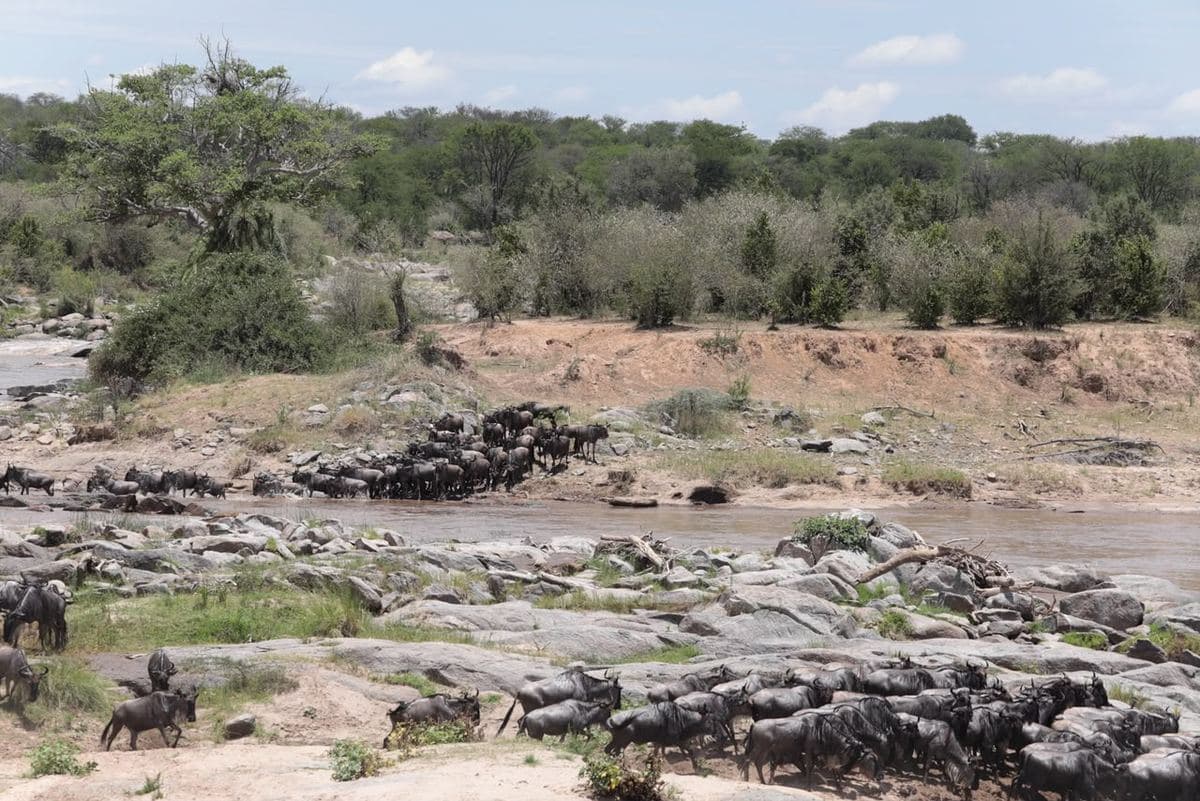
A river crossing is not a scheduled event, and anyone who tells you otherwise is selling something. What a good guide can do is read the build-up, and position for it.
What they are actually watching
Herds gather at a crossing point for hours, sometimes for a full day, before anything happens. The guides watching them are reading three things at once.
- Pressure from behind. A column still arriving from the south pushes the front rank towards the water whether it wants to go or not.
- The bank itself. Wildebeest will not commit to a descent they cannot see the bottom of. The usable crossing points move with the water level.
- Zebra. They cross first more often than not, and they are the better indicator. If the zebra at the front are drinking rather than looking across, nothing is imminent.
The quiet hour
Most vehicles arrive mid-morning, wait ninety minutes and leave for lunch. The crossing then happens at two in the afternoon to an audience of four cars. This is not bad luck — it is the predictable result of a lunch booking.
The single most useful thing on a crossing day is a packed lunch and no reason to be anywhere.
We carry food and water in the vehicle and stay out. If you want to leave, we leave. But the default is that we do not.
Choosing the spot
There are a handful of regularly used crossing points along the Mara in the Kogatende area, and on a given morning the guides are in radio contact about which ones are building. The judgement is about whether to commit to a bank or hold back where you can reach two.
Committing gets you the front-row position if you are right. Holding back gets you a worse angle at whichever one goes. On a four-night stay we will usually do both, on different days.
What none of this produces is a guarantee. Four nights in the right region, a guide who reads the build-up and the patience to sit — that is the honest version of the offer.